THE WASH tells a crucial–and for me– unknown story of the 1881 Washerwomen’s Strike in Atlanta, among the first such labor movements led by African American women in the country. It’s a dramatic historical event and victory which raised wages and garnered some measure of respect for the Black laundresses doing the backbreaking, round-the-clock work of washing dirty clothes– mostly for white families who often refused to pay. This new play by Kelundra Smith, presented by Front Porch Arts Collective, directed by Tasia A. Jones, and performed by a first rate cast, has essential and dramatic history to draw on, but none of the drive a strong dramatic engine would have provided such noteworthy material.
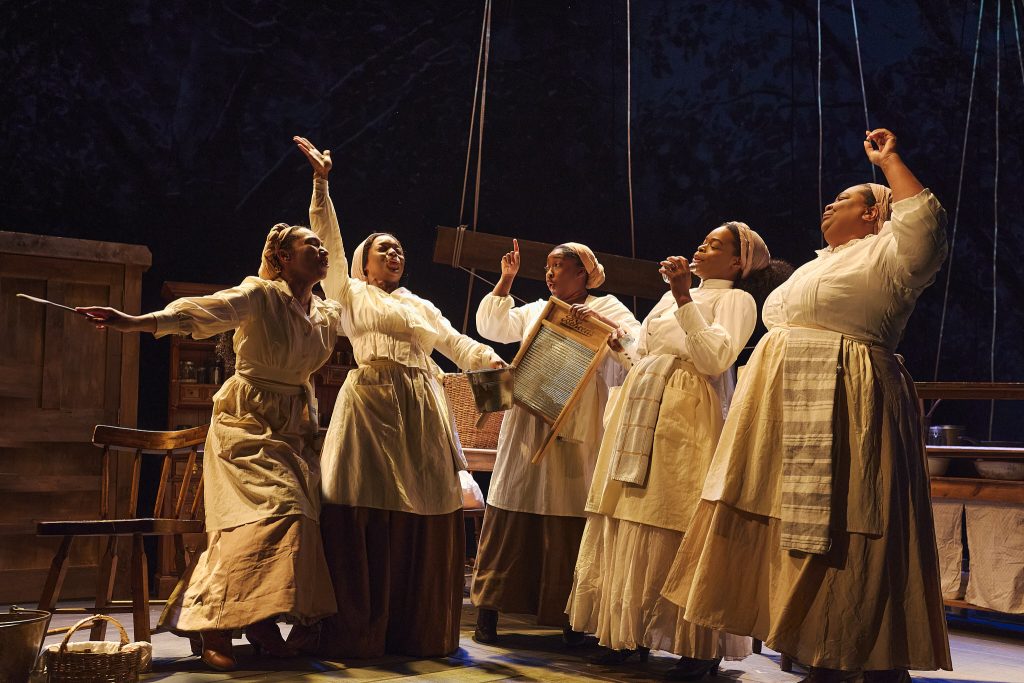
(l. to r.) Kiera Prusmack, Lindsey McWhorter, Jada Saintlouis, Marhadoo Effeh, MaConnia Chesser. Photo by Ken Yotsukura
The play’s first scene is a beauty and very promising. It opens in shadow, with beautifully choreographed movement and sound as a group of laundresses silently act out the physicality of their strenuous work. Wash, rinse, dry, iron, repeat. They seem like one organism, foreshadowing the unity and strength required for the struggle to follow. Then Amanda E. Fallon’s warm lighting comes up on Janie Howland’s naturalistic set which houses all the action around the five distinct, fictional women working in the laundry co-op and who each have a story.
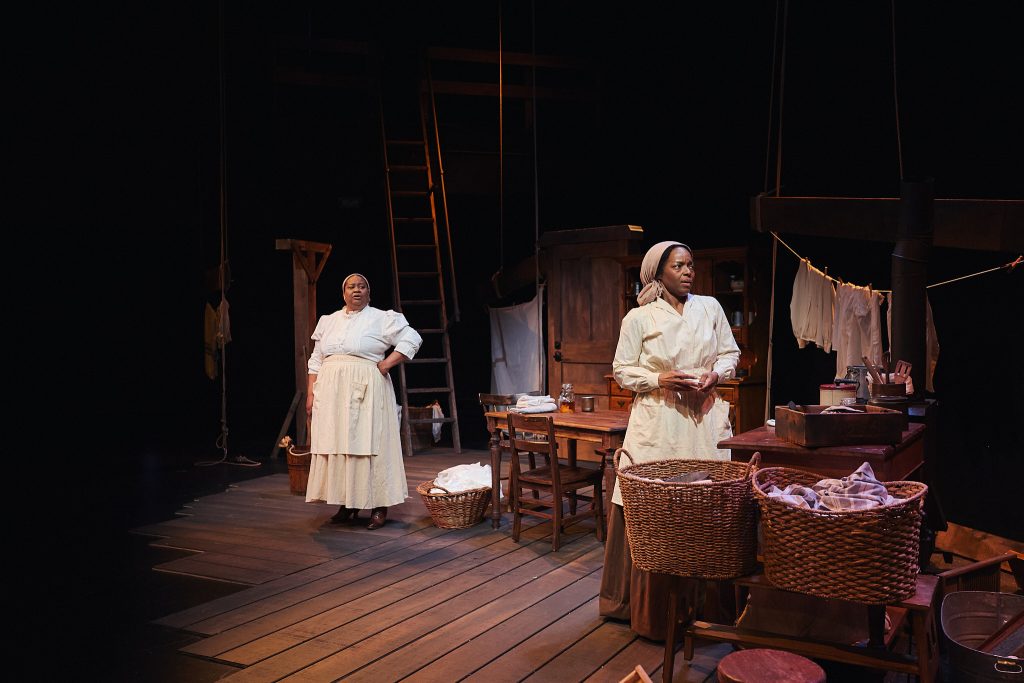
The-Wash-MaConnia-Chesser-Jeanie-and-Lindsey-McWhorter-Anna-Photo-by-Ken-Yotsukura.jpg
Anna (Lindsey McWhorter, also choreographer) who runs the business, is up early counting their meager proceeds which amount to a hill of beans- literally- instead of cash. Her hearty best friend Jeanie also lives at the co-op and is played by a very funny and dynamic MaConnia Chesser. They talk business and trade secrets about the dirty laundry of their cheap “cracker” clientele who cheat them out of their due. Marhadoo Effeh plays Jeanie’s tempermental foil Thomasine or “Tommy” who’s raising 4 kids and taking a beating from her abusive husband, while sweet newlywed Charity (Jada Saintlouis) dreams of starting a family. Kiera Prusmack as Jewel aspires to a life beyond laundry and is pursuing an education.
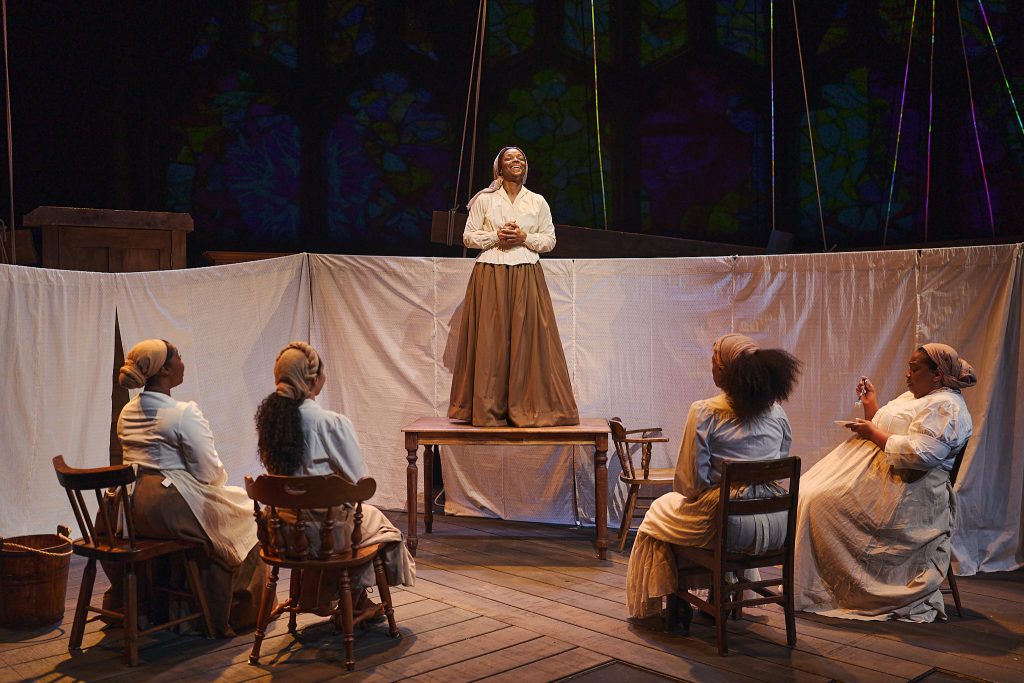
l.-r.-Jada-Saintlouis-Kiera-Prusmack-Lindsey-McWhorter-Marhadoo-Effeh-MaConnia-Chesser.-Photo-by-Ken-Yotsukura
These stories of economic hardship, limited opportunity, undergirded by racism in the Reconstruction era south, eventually lead to an effectively staged scene where the women go door to door politely asking their clients for the back pay they’ve earned–to ill effect. Desperate to survive, the women drop the politesse and decide to strike: No pay, no wash! They demand the unheard of sum of $1 for 12 pounds of laundry!! They’ve struck a chord: within 3 weeks, the newly formed “The Washing Society” grows from 20 to 3000 women–including white laundresses who join them in an unprecedented act of unity across the color line. A white laundress named Mozelle (Eliza Fichter) gains their trust and keeps entering and exiting with news of more and more white women joining.
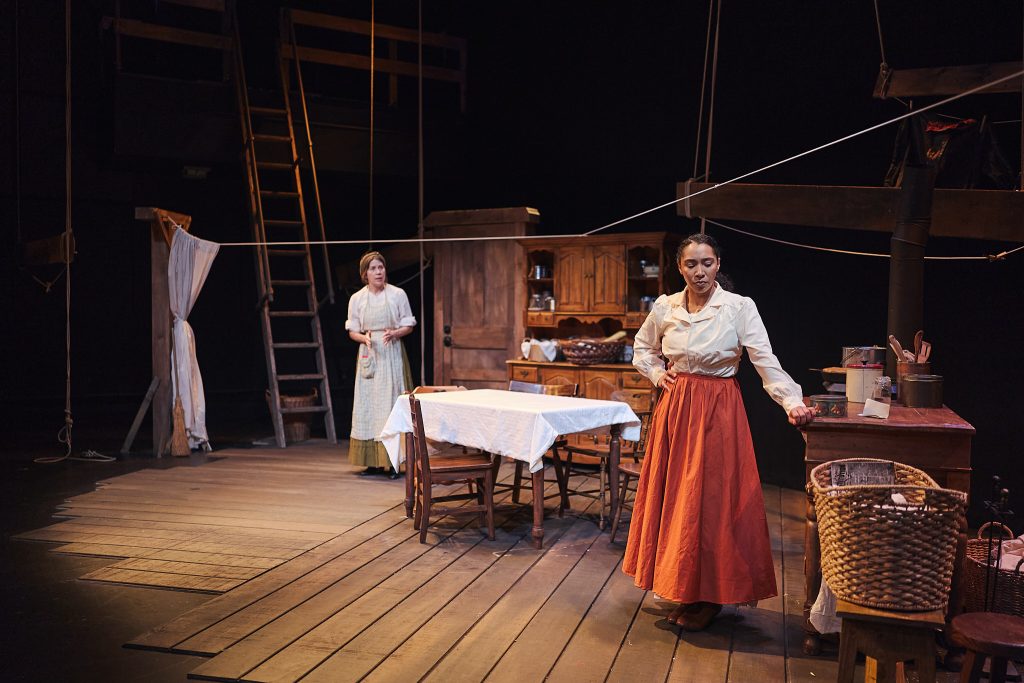
Eliza-Fichter-and-Kiera-Prusmack.-Photo-by-Ken-Yotsukura
All of these characters feel like placeholders for various pieces of info or points of view rather than fully fleshed out people, organic to the unfolding events. The cast is resourceful and charismatic– but they just don’t have enough to play, and are too often saddled with exposition, stiffly staged, as their dialogue trots out information. I kept waiting for the climactic moments, to feel the mounting danger of these circumstances and what’s at stake. When one of the women is late coming home, we never feel the suspense of what might have befallen her as it’s happening–just the aftermath. The action is elsewhere, offstage, and we’re getting it second hand with all the urgency of a term paper. The playwright hasn’t found a way to compel us dramatically and make this history come alive.
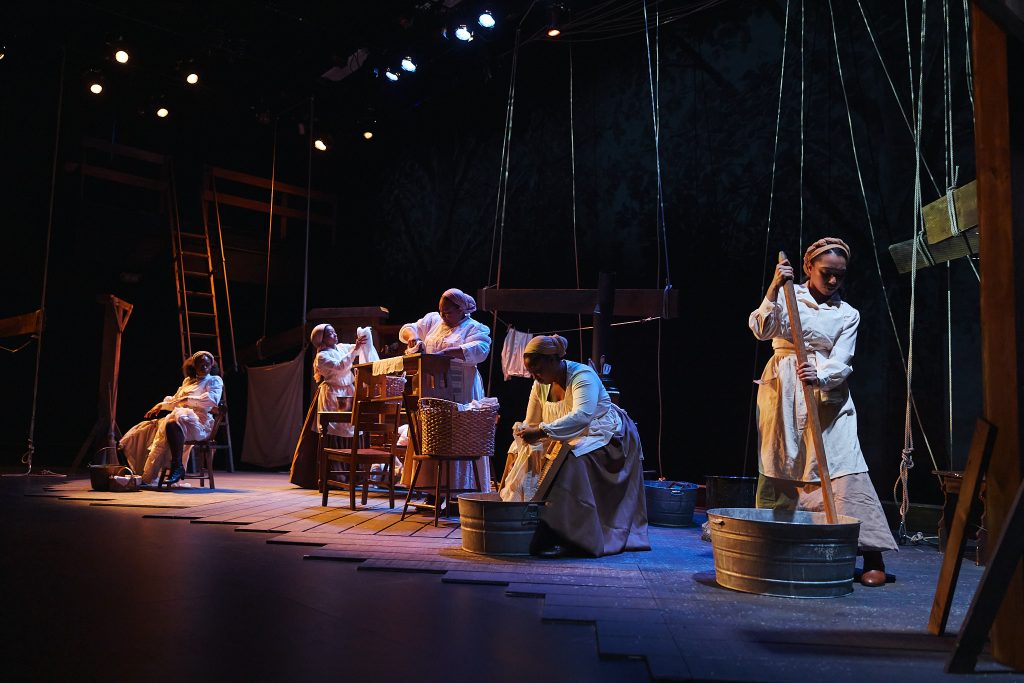
l.-to-r.-Marhadoo-Effeh-Lindsey-McWhorter-MaConnia-Chesser-Jada-Saintlouis-and-Kiera-Prusmack.-Photo-by-Ken-Yotsukura
I learned a lot: how unusual this labor movement was for the times, how pivotal and groundbreaking, how significant in the annals of Black history. If only more of this LIVED-IN history had come out in THE WASH. THE WASH is now onstage at the Calderwood Pavilion presented by THE FRONT PORCH ARTS COLLECTIVE through November 22!